How I lost my $50,000 Twitter username – The Next Web.

Today we bring you a story from the ‘holy-shit-this-is-terrifying’ department.  Naoki Hiroshima is the creator of Cocoyon & is also a developer for Echofon. The original story appears here.

All I can say to this, as a GoDaddy customer, is WOW.  Just WOW WOW WOW.

GoDaddy transferred the ownership details to a 3rd Party without confirming the changes with the original account owner, and then refused to transfer them back to the original owner, even after filing a dispute, because they were no longer the owner (because the now-owner/attacker denied the request apparently).

I also hold PayPal highly accountable for this, as that’s how the attacker apparently gained access to the personal information that started the whole chain reaction.  I no longer maintain a Paypal account (at least not one linked to any cards or bank accounts) but I DO use GoDaddy and I am VERY worried about this now.

My domain isn’t worth squat, but the idea that someone could take it away from me is thoroughly depressing.

Good grief.

I entered a support ticket with GoDaddy asking for clarification and a response and I’ll let you know if I get one.

Good luck Naoki.


Changes to LogMeIn Free.

Coming to us today from the “Let’s-Kill-Off-Our-Brand” department, we bring you horrible, sad news about what was once a killer product.

LogMeIn Free is being turned into a paid-for-only product.  LogMeIn is a service that lets you remote access into machines from a central location.

I guess if you think you’re the only game in town, then this is a great idea.

But since you’re not due to these wonderful things (a short list of LogMeIn Alternatives):

  • TeamViewer (Free for Personal Use)
  • Microsoft Remote Desktop (Free for any use on any machine with Windows Professional or Higher)
  • Mikogo (free for Personal Use)
  • imPcRemote (free for Personal and Business Use, Based on # of machines)

So I guess the question is, why the hell would you do this to yourself?

I love the answers to the FAQ though, typical corporate speak.

1. Q: Why are you making this change?
A: In order to address the evolving needs of our customers, we will be unifying our portfolio of free and premium remote access products into a paid-only offering. We believe this offering to be the best premium desktop, cloud and mobile access experience available in the market today

The real answer: because we can.  Some of you will pay, and some of you will go.  We don’t care.  The bottom line is now, as it always was: Money.

Good grief.  $50 a year for 2 computers when it was free for as many computers as you wanted.

Guess I’m nuking my account.

Time to research the alternates.

Google bans Chrome extensions purchased to deliver adware | The Verge.

This is some pretty good news overall.  Google banning extensions that start generating ads and hijacking the browser.  I hope they start doing extensive testing though, because there are other problems to be addressed too.

For example, Chrome Extensions automatically update to the latest version in the background.  NORMALLY, this would be good, as it creates a seamless experience for the end user.  However, this isn’t always the best thing.

A while back, I started using Window Resizer (which has since gone away following the scandal — more) for application and website development testing.  About 3 weeks ago I noticed that my Google searches were redirecting to Ecosia.org and timing out.   A cursory Bing search took me to the developer page saying that they had updated Window Resizer to automatically opt everyone into using EcoLinks.  Ecosia couldn’t handle the load, and began timing out.  This effectively broke Google searching for a LOT of people.

All because the developer thought they knew better than the end user (“Hey this is a great idea and helps everyone so I’m going to make it opt-out instead of opt-in!”).

Needless to say I quickly uninstalled that extension and found another one to use.

Net neutrality court ruling: Net neutrality killed | BGR.

Coming to us from the “did-you-really-expect-a-different-outcome” department, we bring you the latest news regarding (and probably the last nail in the coffin for)  net neutrality in the USA.

Why should you care? Very good question.

Right now, you want to use Netflix.  You pay Netflix for the service.  You pay your ISP for the internet connection to get you access to Netflix.  Netflix doesn’t pay your ISP anything, because they pay their own provider for access to the internet (peering connections aside).  Now, your ISP can come out with a competing video service (which is a good thing) and prioritize the traffic over Netflix (this is BAD) unless Netflix chalks up money to your ISP (this is VERY bad).  That means unless Netflix is willing to pay more for the access they used to have then their services can be treated like 3rd-class traffic.  Like your HD movie streaming? Good luck when it’s set to bulk and given the lowest priority on the internet.

Why is it also bad?  Do you do ANY torrenting?  Guess what.  Your ISP can say all torrent traffic is de-prioritized and controlled to be slower than molasses.  Why is this bad?  Do you play an MMO like World of Warcraft?  Do you know how you get your patches?  Guess what.  It’s a torrent.  Do you download Linux distributions?  Guess what, you’re probably using a torrent.  Do you pirate shit (please don’t)? Guess what? Good bye to that traffic.

Doing protesting?  Trying to get a grass roots campaign together?  The provider doesn’t like your opinion? Your traffic can disappear off the internet.

I cannot overstate this: this is very bad news for the Internet.  Very, very bad.

But really, we all knew it was coming.  The telecommunications lobby is incredibly powerful.  Their lobbyists have incredibly deep pockets and they have the attention of those judges.

Good grief.

There have been a lot of changes to Youtube over the years.  Early users of Youtube may remember that, for a time, Youtube was all but free of advertisements.  It was a place of sharing content (both legitimate content and illegitimate content alike).

And then the great copyright wall fell.  Ads became prevalent on almost every video.  People started to get takedown notices and copyright ‘marks’ resulting in videos and channels being shut down.

Surely, the commercialization of Youtube has had a marvelous effect for people who spend their time making content available to the masses.  People now make channels dedicated to gaming and get to monetize their hard work.  This is a good thing!  I review games too.  I review technology in general.  But there’s big changes happening recently, and it’s killing the very core of Youtube.

Angry Joe rants about this here (a little over 18 minutes long; NSFW — LOTS OF CURSING – this is Angry Joe’s style):


The problem in a nutshell is this: If I review a game, who is entitled to whatever monetary gains are generated by this review?  Me, as the author of the review?  <Game Developer House>, as the big name behind the game itself?

It seems that the answer is now <Game Developer House>.  Youtube is placing copyright claim marks against users who place reviews of video games, movies, and music online – and then monetizing the content for the original artists instead of the people who have put in the effort to make the reviews.

Forbes has an interesting article about it here as well. Forbes Article

It’s kind of disheartening to see what Google is turning Youtube into.  It’s not at all encouraging.  There was a spectacular backlash during their ‘enhancement’ of Youtube by forcing linkage to your Google+ profile:

Violet Blue via ZDNet wrote an awesome piece about this.

Cory Doctorow via Boing Boing had a bit of a response – but it wasn’t helpful at all (though they have since ‘rectified’ the spam issue).

Paul Tassi via Forbes notes this uproar as well.

So, is Google trying to kill off Youtube with tons of ‘bad’ changes to the site?  Possibly.  Likely? No.  They make a shit ton of money from it.

Are the changes lately for the better?  Only for big wigs and big execs at companies.

You can make money without doing evil.” || “Don’t be evil.

Hah.

A few months ago I successfully deployed and configured an Ubuntu 12.04 LTS Server Edition for the purposes of installing Nagios and doing on-site monitoring for key servers.  Yesterday I did a bunch of security and hotfix updates to the server, since it was VERY behind (talking >20 security updates and what not) on a lot of packages.  Following a reboot (I know, I know, not necessary but I’m still firmly rooted in the land of Windows where updates and reboots go hand in hand; for shame) I noticed a surge of alerts from Nagios and was thoroughly annoyed to see that the load on the server was consistently way too high – I was getting Warning / Critical alerts nearly every 15 minutes.  Uh oh!

***** Nagios *****

Notification Type: PROBLEM

Service: Current Load
Host: localhost
Host Alias: localhost
Address: 127.0.0.1
State: CRITICAL

Date/Time: Wed Dec 4 23:48:58 EST 2013

Additional Info:

CRITICAL – load average: 5.89, 4.95, 4.04

Status Details: https://nagios/nagios/cgi-bin/extinfo.cgi?type=1&host=localhost

This continued for a day until I got fed up with it.  I told Nagios to stop paying attention to that service and to ignore it completely.  I basically shit-canned the project and ignored it for about 24 hours until I realized it was going to be a slow day today.  So I SSH into the box and load up top, and I wait.  I wait and I wait and I wait.  Every 15 minutes I would see a surge of spawned processes for ping, check_snmp, and a few other ones.  I started to get a clear picture of what was going on.

The reboot of Nagios reset the next check period to be the same for all devices, which was a big problem.  We have 360+ devices in our monitoring scheme, and of that nearly 760+ services being monitored (with more coming in the future, I need to setup Windows device monitoring for our DCs and file servers).  They were all trying to run at the same time.  All 760.  This isn’t a ridiculously beefy server we’re talking about here.

srv-nagios: Virtual Machine Details
VMware Virtual Platform
Intel(R) Xeon(R) CPU E5-2650 0 @ 2.00GHz
1GB RAM
20GB SCSI Virtual HDD

So after sitting on it a bit I decided to do some research and found that I could limit the number of simultaneous checks in Nagios.  This is of course noted in the documentation.  I must have glossed over it.


Maximum Concurrent Service Checks


Format: max_concurrent_checks=<max_checks>
Example: max_concurrent_checks=20

This option allows you to specify the maximum number of service checks that can be run in parallel at any given time. Specifying a value of 1 for this variable essentially prevents any service checks from being run in parallel. Specifying a value of 0 (the default) does not place any restrictions on the number of concurrent checks. You’ll have to modify this value based on the system resources you have available on the machine that runs Nagios, as it directly affects the maximum load that will be imposed on the system (processor utilization, memory, etc.). More information on how to estimate how many concurrent checks you should allow can be found here.


Our setting was of course 0, meaning that Nagios tried to run as many checks as it wanted at the same time.  After thinking on it a bit, I figured out what I wanted to do.  We have 760 someodd checks.  We have 15 minute intervals.  I did 760/15 and it came out to be about 51 checks per minute.  I started there.  I set max_concurrent_checks to 51 and BAM load immediately dropped down to a more stable level.

OK – load average: 0.00, 0.13, 0.19

As I add more devices and services to Nagios I will tweak the value.  Checking 60 things at a time should be easy enough to handle, it works out to about 1 a second and since the vast majority of my checks and services are pings and simple snmp queries it shouldn’t be too bad.

Here’s hoping.

A happy Nagios is a happy Mike.
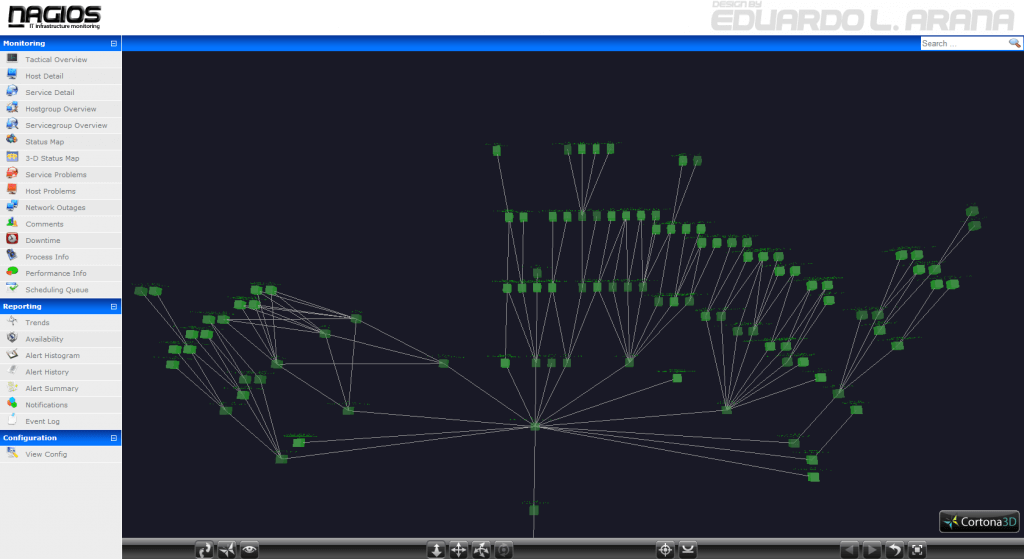
Nagios

Switch to e-books was an unmitigated disaster, says school principal – Independent.ie.

This just in, poorly informed people making tech decisions without guidance nor the correct kind of knowledge will invariably make bad decisions and then blame the tech instead of the poor management.

Can we really trust a person who refers to hard disk drive storage as memory to make the right call?

An unmitigated disaster, perhaps, but not because of the tech.  A poorly planned out roll out with poor tech management for sure.  But the fault does not lie squarely on the shoulders of the technology.